


"Dirty" Details
Why Compost?
When organic waste goes to a landfill, it is buried under layers of trash. This creates an oxygen-free environment where bacteria break down the food and produce methane.
• The Problem: According to the latest Intergovernmental Panel on Climate Change data, methane is 83 times more potent as a greenhouse gas than carbon dioxide over a 20-year period.
• The Composting Solution: Because oxygen is present, microorganisms digest the organic waste, turning it into nutrient-rich compost, and releasing a small amount of CO2 instead of methane.
• Locking it Down: Healthier plants pull more CO2 from the air. With compost, this carbon becomes stabilized in the form of humus, locking it underground for decades.
Composting Locations & Hours
Jan - Mar
Saturdays
9-11 am
Apr - Nov
Saturdays
8-noon
Year Round
Tues 9-11 am
Thur 12-2 pm
Calling on climate crusaders
Program Funding & Volunteering
The Compost Stations at the Farmers' Market and Recycling Center are run entirely by volunteers. If you would like to volunteer, please contact us! While Shenandoah Green provides this service for free, we rely on donations to cover the weekly fees and processing costs charged by Black Bear Composting. Black Bear Composting charges $11.10 per week, with a $125 fee per ton of food waste (about 40 bins worth), plus we purchase kitchen bin-sized compostable bags to give to users. Whatever you can give to support us is gratefully accepted!

Reduce Waste!
Compost Made Easy!
Join Shenandoah Green at the Staunton Farmers' Market, 2020 West Beverley St.
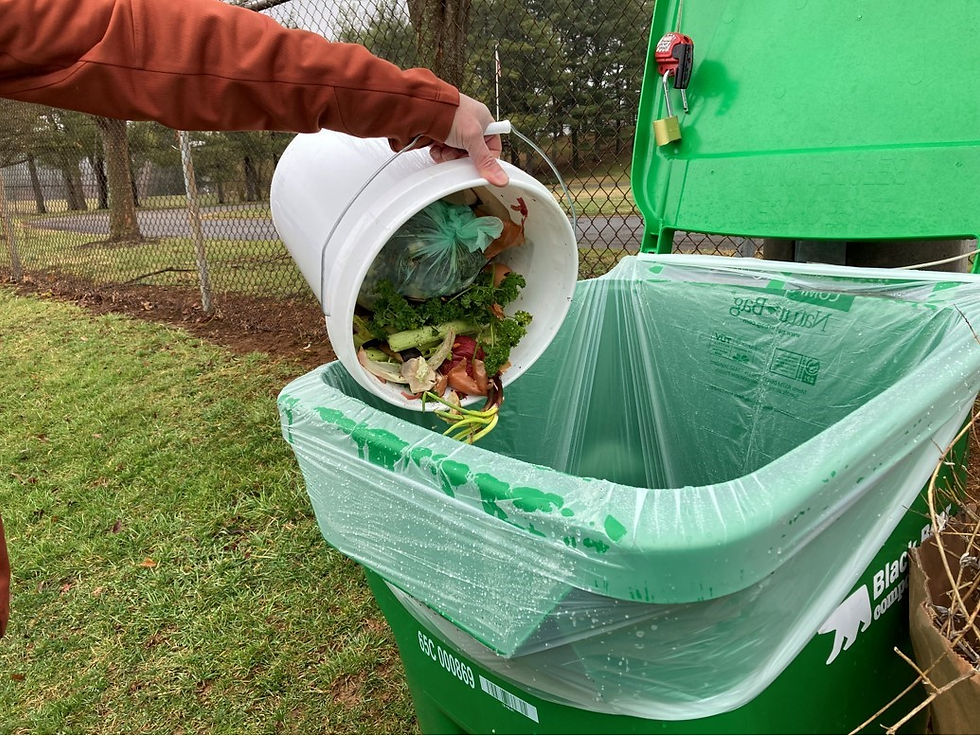
Contactless Drop-off: Clean and easy food waste disposal.
Expert Advice: Volunteers available to answer your questions.
Supplies: 5-packs of three-gallon compostable bags available on-site.
Support: Donations welcome!
Left-Overs
• Fruits and Vegetables
• Plate Scrapings
• Milk Products
• Meats
Processing Wastes
• Egg Shells
• Bones
• Cooking Oil & Grease
• Pulp, Skin, Peelings
• Coffee Grounds and Filters
Packaging
• Uncoated Paper: Napkins, Paper Towels
• Certified Compostable Plastics
• Pizza Boxes
Composting Bags
Need More Bags?
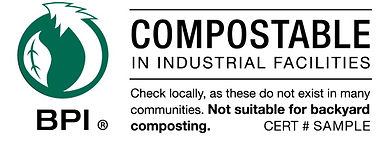
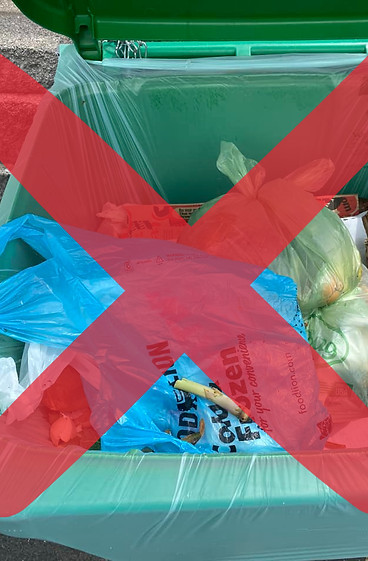
IMPORTANT: Always verify that your bags feature the official BPI label before disposal. Standard plastic bags—even those labeled "biodegradable"—will contaminate the compost, introducing microplastics into our community’s compost and rendering it unusable for local gardens.
Find various sizes at:
-
Our compost stations at Farmers' Market & Staunton Recycling Center
-
RefillRenew (240 N. Central Ave)
-
Some local grocers in the aisle with trash bags
-
Online via your preferred retailer



Our Valued Partner
Black Bear Composting
Black Bear's industrial-scale process can handle things home composting can’t including: Meat and Bones, Dairy Products, Fats and Greases, Plastics (BPI labeled).
Their compost carries the US Composting Council’s Seal of Testing Assurance, indicating that the product is rigorously tested for pathogens, heavy metals, and nutrient content for safety in vegetable gardens and professional landscaping.
They are also an educational resource, explaining the environmental benefits of composting, such as reducing methane in landfills, improving soil water retention, and carbon sequestration.
Smart Composting
Wish-composting
Wish composting is when well-meaning persons toss in things they hope are compostable. If you aren't 100% sure an item is compostable, put it in the trash.
• Make it a habit to peel stickers off fruit and remove ties before you toss your scraps into the bin.
• “Biodegradable" is a marketing term that just means the plastic breaks into smaller, invisible pieces (microplastics). Only items labeled "Certified Compostable" with the BPI logo are safe for our station.
• Tea bags are actually made of a fine plastic mesh, and glossy paper plates often have a thin polyethylene coating. Stick to loose-leaf tea and uncoated paper products to be safe.


Food Waste & Composting FAQ: What is composting and why does it matter?
Composting is the natural process of decomposing food waste into nutrient-rich soil. By composting your scraps, you reduce garbage volume, preventing the production of harmful methane gas in landfills. We partner with Black Bear Composting, an industrial-scale facility, and can process items that backyard bins can't, such as meat, bones, and dairy.
WHAT CAN I BRING TO THE COMPOST STATION? Our general rule is "If it grows, it goes". Acceptable items include: Produce: Fruits and vegetables (including pulp, skins, and peelings). Proteins & Dairy: Meat, bones, milk products, fats, and oils. Paper & Dry Goods: Coffee grounds/filters, eggshells, and uncoated paper like napkins or paper towels. Certified Compostable Servingware: Only products with the BPI-certified compostable label. Note: We currently only accept residential food waste; please take yard waste (grass, weeds, brush) to the Regional Landfill.
NEVER COLLECTED FOOD WASTE BEFORE? Here's how to do it: Just toss your kitchen scraps into a counter-top bowl throughout the week. You can store your full bags in a lidded bin outside—or even in your freezer to prevent smells—until you're ready to see us downtown on Saturday morning.
HOW DOES THE STAUNTON COMPOST STATION WORK? Ready to see us at the Farmers' Market Saturday mornings or at the Recycling Center? Bring your food waste to the Compost Station and dump it in the bin – it’s that easy! The bin will go to Black Bear Composting and be turned into compost.
WHERE CAN I GET COMPOSTABLE BAGS? You may use brown paper bags, paper boxes (remove tape/labels), or BPI-certified bags. Local Sources of Compostable Bags: • RefillRenew: (240 North Central Avenue, #4, Staunton, VA 24401), stocks compostable bags • Simple Truth Small Compostable Kitchen Bags: from Kroger, 850 Statler Blvd, Aisle 13. These are the same size as the larger, heavier Lirex bags that we carry at the Compost Station. • Cranberry’s Grocery and Eatery: 7 S. New St, is in the process of stocking 1-gallon bags, the smaller size we provide at the Compost Station. They also sell a Compost Keeper, a ceramic bin to go on the countertop that uses 1-gallon bags. Online: Search for BPI-certified brands • Our Suggestion: Lirex 200-Count 100% Compostable Bags, Durable, Unscented, 2.6 Gallon, US BPI&ASTM6400 Certified Compostable Waste Bags. These are the larger, heavier bags we carry at the Compost Station
HOW DO I AVOID MAKING A MESS FROM ROTTING BAGS? Compostable bags will start to decompose and leak when wet and warm. Manage Moisture: Add a paper towel or non-glossy paper to your bin to soak up liquid and discourage fruit flies. Transport Safely: Since compostable bags begin to disintegrate when wet, carry them to the station in a sturdy container like a 5-gallon bucket.
CAN I BUY FINISHED COMPOST? Compost may be purchased directly from Black Bear Composting (blackbearcomposting.com)